Medicare Extra Help in Indiana: Who Qualifies for the LIS and How to Apply
Table of Contents
If you live in Indiana and your income is modest, Medicare has a program that can pay most of your prescription drug costs. It is called Extra Help, sometimes referred to as the Low Income Subsidy (LIS). Qualifying can drop your Part D premium to $0, wipe out the deductible, and cut generic drug copays to a few dollars. About 14 million people across the country are enrolled in some level of Extra Help, but Social Security estimates roughly 3 million more — including thousands of Indiana residents — are eligible and have never applied.
This guide walks IN residents through who qualifies, exactly what Extra Help pays for in 2026, and how to submit an application that actually goes through the first time.
What Extra Help Actually Pays For
Starting in 2024, Congress eliminated the old "partial" Extra Help tier. Now there is only one level of benefits, and it is generous. Once you qualify in Indiana, here is what you get:
- $0 monthly premium for any benchmark Part D plan in the Indiana region
- $0 annual deductible (most plans charge $590 in 2026 without Extra Help)
- Capped copays: roughly $4.90 for generics and $12.15 for brand-name drugs in 2026 (CMS adjusts these caps annually)
- $0 copays once you reach the catastrophic coverage phase
- No late enrollment penalty — Extra Help recipients are protected from the Part D late enrollment penalty even if they delayed signing up
- Special Enrollment Period to switch Part D plans once per quarter during the first three quarters of the year
To put that in perspective: a resident of Indiana taking three brand-name medications without Extra Help could easily pay $200 to $400 a month. With Extra Help, that same person pays under $40 a month and hits the new $2,000 Part D out-of-pocket cap faster, after which all covered Part D drugs are free for the rest of the year.
That late enrollment penalty waiver is a bigger deal than most Indiana residents realize. "If you qualify for Extra Help/LIS, you will receive help on the cost of your Medicare Part D premiums, copays for your medications, and the waiving of any Medicare Part D late enrollment penalties you may currently be incurring," says Steve Thurmond, a licensed Medicare agent in Tennessee. For someone who delayed Part D enrollment by several years, that penalty can run $20 or more a month for life — and Extra Help wipes it out.
2026 Income and Asset Limits
Eligibility is based on two things: income and "resources" (countable assets). The limits are federal, not state-specific, so the thresholds for Indiana residents match those nationwide. For 2026:
Income Limits
- Single person: Annual income up to $23,475 (150% of the federal poverty level)
- Married couple living together: Combined income up to $31,725
Social Security does not count every dollar you bring in. They exclude the first $20 of any monthly income, the first $65 plus half of remaining earned income, food stamps, housing assistance from Indiana programs, and home energy assistance. That means your gross income can be higher than the threshold and you may still qualify once these adjustments are applied.
Asset (Resource) Limits
- Single person: Up to $17,600 in countable resources
- Married couple: Up to $35,130
"Resources" means checking and savings accounts, stocks, bonds, and most investment accounts. What does not count:
- Your primary home in Indiana (no value cap, even if real estate has appreciated significantly)
- One vehicle
- Personal possessions, household goods, and wedding rings
- Burial plots and up to $1,500 per person set aside for burial expenses
- Life insurance policies with a face value under $1,500 (larger policies count toward the resource limit)
The asset limit is where most IN applicants get tripped up. Retirement accounts in your name (IRAs, 401(k)s) do count at their current balance (not the required minimum distribution amount), so a modest IRA can push someone over the threshold even when income is low.
Automatic Enrollment: Who Does Not Need to Apply
You are automatically enrolled in Extra Help and do not need to apply if you have any of the following:
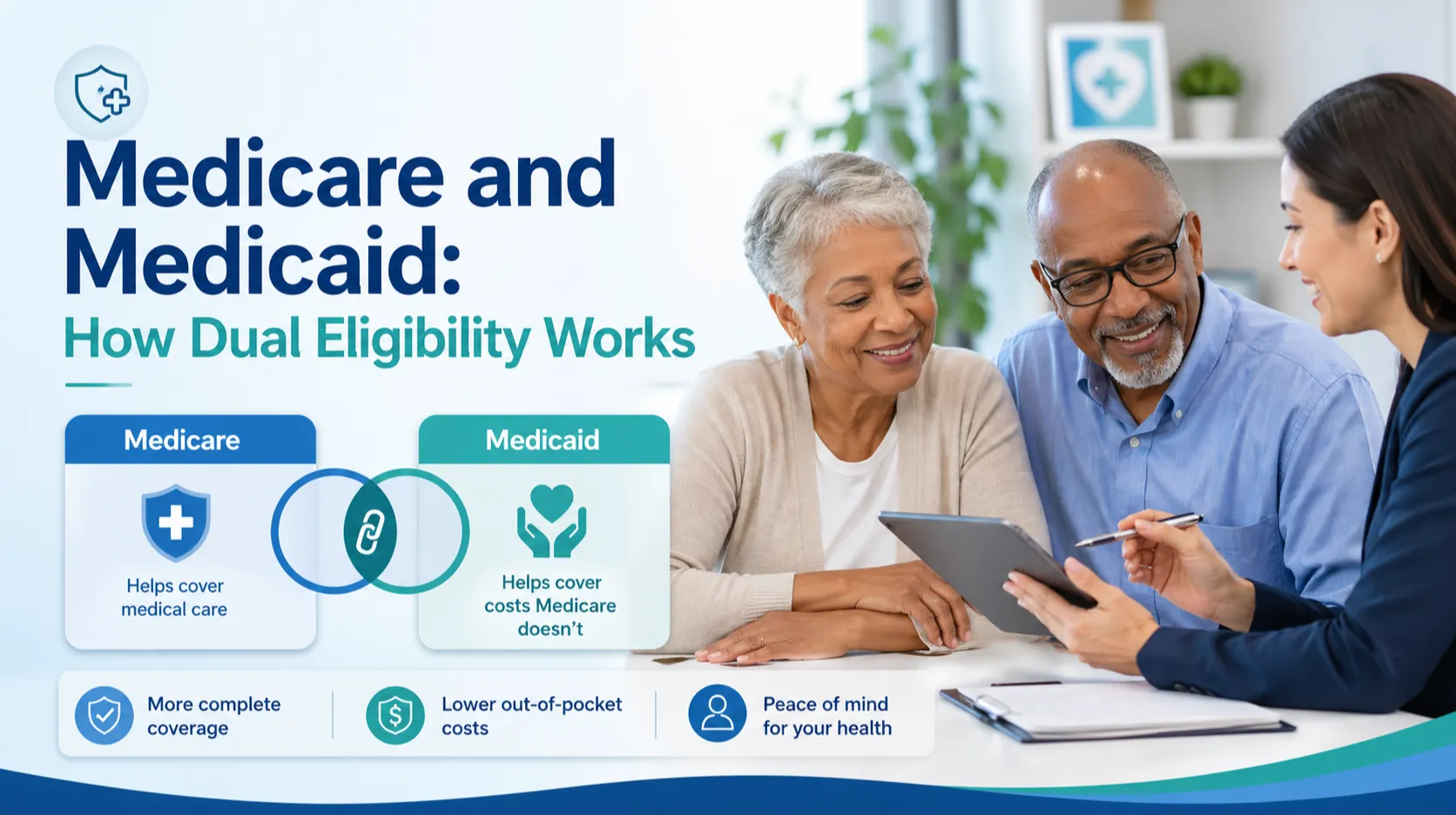
- Full Indiana Medicaid coverage — both Medicare and Medicaid (often called dual eligibility)
- A Medicare Savings Program through Indiana Medicaid (QMB, SLMB, or QI)
- Supplemental Security Income (SSI) benefits
If you later lose Medicaid or Medicare Savings Program eligibility because your income or assets go up, Social Security typically extends your Extra Help through the end of the calendar year under a “deemed status” grace period, so your drug coverage does not stop the day your Medicaid ends. You may still qualify for Extra Help on its own after that — reapply directly through Social Security so your Part D coverage does not lapse into the standard costs.
If you fall into one of these groups, Medicare sends a purple or yellow notice in the mail confirming your status and assigning you to a benchmark Part D plan available in Indiana. You can switch to a different plan if you prefer, but the coverage starts automatically.
Indiana residents in Medicare Savings Programs are sometimes surprised to learn they have been getting Extra Help all along — the two programs run separately but Medicare Savings Program enrollees are auto-qualified.
The path looks different depending on which program got you there. "If you have both Medicare and Medicaid, qualifying for LIS or Extra Help should be automatic based on your income," says Ted Wallus, a licensed Medicare agent in Massachusetts. "If you do not qualify automatically, you will typically receive a paper application in the mail from Social Security. I’ve seen this form included in a client’s mail when they first sign up for Medicare."
How to Apply if You Are Not Automatic
If you do not qualify automatically, you have to apply. IN residents have three ways to do it:
1. Online Through Social Security (Fastest)
Go to ssa.gov/extrahelp and complete the application electronically. Most people finish in 20 to 30 minutes. You will need recent bank statements, tax returns or Social Security statements showing income, and information about any investment accounts. Decisions usually come back within two weeks.
2. By Phone
Call Social Security at 1-800-772-1213 (TTY 1-800-325-0778) and request the Extra Help application. A representative can either help you complete it over the phone or mail you a paper form to your Indiana address.
3. At a Local Office
You can apply in person at any Social Security office in Indiana. Appointments are usually required — walk-ins get long waits. Bring documentation of income, assets, and your Medicare card. Indiana also has SHIP counselors (State Health Insurance Assistance Program) who can sit with you and walk through the application for free.
You can also apply for the Indiana Medicaid program at the same time using the same Extra Help application. Social Security will send your information to Indiana, which is faster than applying separately.
Most people find the application easier than expected. "If you are on Medicaid through the state, you will be automatically enrolled in the Extra Help program. If not, you will need to apply, which is a pretty simple application," says Chris Koehl, a licensed Medicare agent in Indiana. A local agent can sit with you and fill it out if doing it yourself feels intimidating.
What Happens After You Apply
Social Security will mail a decision letter, typically within 14 to 30 days. If you are approved, the letter tells you your benefit level and when coverage starts. You will then need to be in a Part D plan available in Indiana — if you do not pick one, Medicare will assign you to a benchmark plan in your region.
Approval is good for one year. Social Security will send a recertification packet asking you to verify your income and assets. If your financial situation has not changed much, recertification is quick. If you have a major change (sale of a home in Indiana, inheritance, job loss), you should report it as soon as it happens rather than waiting for the form.
If You Are Denied
You have 60 days to appeal. Denials often come down to misreported asset balances or one-time income spikes that pushed you over the limit for the snapshot Social Security took. Many appeals from IN applicants succeed when they provide clearer documentation. The appeals process is similar to the steps used to appeal Medicare coverage decisions.
Extra Help and Choosing a Part D Plan in Indiana
Extra Help works with any Part D plan, but the program covers your full premium only for benchmark plans — designated low-cost plans in your region. Indiana typically has several benchmark plans available, and the list updates each year. If you pick a non-benchmark plan, you may pay a partial premium.
The good news: Extra Help gives you a Special Enrollment Period to switch plans once per quarter during Q1, Q2, and Q3 each year. Most other Medicare beneficiaries are locked into their plan choice from January 1 through the next Annual Enrollment Period in October. If you find your current plan is not covering one of your medications, you can change to another plan without waiting until next year.
If you are still choosing your first Part D plan, our guide on how to compare and choose a Part D plan walks through the formulary, pharmacy network, and total cost calculations to look at. Indiana residents may also want to read about the best Part D plans available and how the Part D coverage gap (donut hole) works in 2026.
Common Mistakes to Avoid
- Forgetting about retirement accounts. IRAs and 401(k)s count toward the asset limit even though you cannot easily access them without penalty. IN residents with modest savings often assume they are over the limit when they are not — and vice versa.
- Not reapplying after a life change. If your spouse passes away or you lose a job and your income drops, you may newly qualify. Apply right away rather than waiting for the next open enrollment.
- Ignoring the recertification packet. If Social Security mails a form and you do not respond, your benefits stop. The packet looks like junk mail — open everything from SSA.
- Picking a non-benchmark plan without checking. If you pick a Part D plan that costs more than the Indiana regional benchmark, you pay the difference in premium even with Extra Help.
Extra Help vs. Medicare Savings Programs in Indiana
Extra Help is sometimes confused with Medicare Savings Programs, but they cover different things:
- Extra Help pays for Part D (prescription drugs)
- Medicare Savings Programs pay for Part B premiums and, depending on the program, deductibles and coinsurance on Parts A and B
If you qualify for a Indiana Medicare Savings Program, you automatically get Extra Help. But the reverse is not true — qualifying for Extra Help does not automatically enroll you in a Medicare Savings Program. If your income is below the Extra Help limit, you should also apply for a Medicare Savings Program through Indiana Medicaid to get help with Part B costs as well. Our guide on Medicare Savings Programs explains the four levels and how to apply.
"I assist people with applying for the Medicare Savings Program. If they qualify then they would no longer be responsible for paying their Part B premium. I also help people with applying for Low Income Subsidy, also called Extra Help. If approved this would allow them to refill their prescriptions at a lower cost and in some cases pay $0 for all prescriptions," says Carrie Cordial, a licensed Medicare agent in Kentucky. Stacking the two programs is where the savings get serious.
Indiana residents who qualify for both programs can also pair Extra Help with a Medicare Supplement plan or Medicare Advantage plan for the best overall coverage. A local insurance agent in Indiana can help you sort through the options. For new enrollees, our guide to turning 65 and how to apply for Medicare in Indiana cover the basics of getting started. You may also want to review who is eligible for Medicare, the full 2026 cost breakdown, common Medicare myths that cost people money, and the major mistakes first-time enrollees make.
Other Programs Worth Stacking on Top
Extra Help is the biggest lever, but it does not have to be the only one. Many states run their own State Pharmaceutical Assistance Programs (SPAPs) that layer on top of Part D and pick up costs Extra Help does not. "I advise seeking extra help through the Low-Income Subsidy and Medicare Savings programs. Although these programs may not cover one hundred percent of your drug costs, they can help offset expenses. You can also check with the State Pharmaceutical Assistance Program, known as SPAP," says Larry Dalton, a licensed Medicare agent in Oklahoma.
For people who qualify for both Medicare and Medicaid, a Dual-Eligible Special Needs Plan (D-SNP) is another option to consider. "When you are approved for Medicaid and you have Medicare Parts A and B, you are dual eligible for D-SNP — dual special needs plans, which will pay for virtually everything, $0 copays," says Andre Cabral, a licensed Medicare agent in New Jersey. A D-SNP wraps Medicare, Medicaid, and Extra Help together into one plan and usually includes extras like dental, vision, and transportation benefits. D-SNPs are offered in many, but not all, counties, so plan availability depends on where you live.
Frequently Asked Questions About Extra Help in Indiana
How long does the Extra Help application take?
Most IN residents finish the online application at ssa.gov/extrahelp in 20 to 30 minutes. Having recent bank statements, tax returns, and Social Security award letters ready before you start makes it faster. Decisions typically arrive by mail within two weeks, though complex cases can take up to 30 days.
Do I have to reapply every year?
No, but Social Security will send a recertification packet asking you to confirm your income and assets. If your finances have not changed much, recertification is quick. Ignore the packet and your benefits stop, so open every envelope from SSA even when it looks like junk mail.
What if my income changes mid-year?
Report the change to Social Security right away rather than waiting for recertification. A drop in income (job loss, spouse passing) may newly qualify Indiana residents who did not before, and a spike (inheritance, home sale) can affect your current benefit. Reporting sooner avoids overpayment issues later.
Does my IRA count toward the asset limit?
Yes. Traditional IRAs, Roth IRAs, and 401(k) balances count as resources even though you cannot easily access them without a tax penalty. This is the most common reason IN applicants who assume they qualify get denied.
Can I qualify if I own my home in Indiana?
Yes. Your primary Indiana residence does not count toward the resource limit, no matter how much it is worth. One vehicle, personal belongings, and burial plots are also excluded.
Sources
- Social Security Administration, Extra Help with Medicare Prescription Drug Plan Costs (ssa.gov/extrahelp): 2026 income and resource limits, application methods, and program eligibility rules.
- Centers for Medicare & Medicaid Services (CMS): annual copay caps for Low Income Subsidy enrollees and benchmark Part D plan designations by region.
- Medicare.gov, Help with Drug Costs (medicare.gov/basics/costs/help/drug-costs): benefit overview and enrollment guidance.
The Bottom Line for Indiana Residents
Extra Help is one of the most underused benefits in the Medicare program. The application is short, the financial impact is large, and millions of people who qualify have not signed up — including thousands of Indiana residents. If your income and assets are anywhere near the limits, it is worth 30 minutes to complete the application — the worst-case outcome is a denial, and the best case is thousands of dollars off your prescription costs every year. Start the application at ssa.gov/extrahelp, call 1-800-772-1213, or connect with a licensed Medicare agent in Indiana who can review your eligibility with you.

Michael Wehner
Licensed Indiana Medicare Agent
Contact Michael through Medicare Agents Hub »